
Lobbies and reception areas
The first thirty seconds of the building. Entry glass, floors, seating, and surfaces maintained at a frequency that reflects how many people pass through rather than how large the space is.
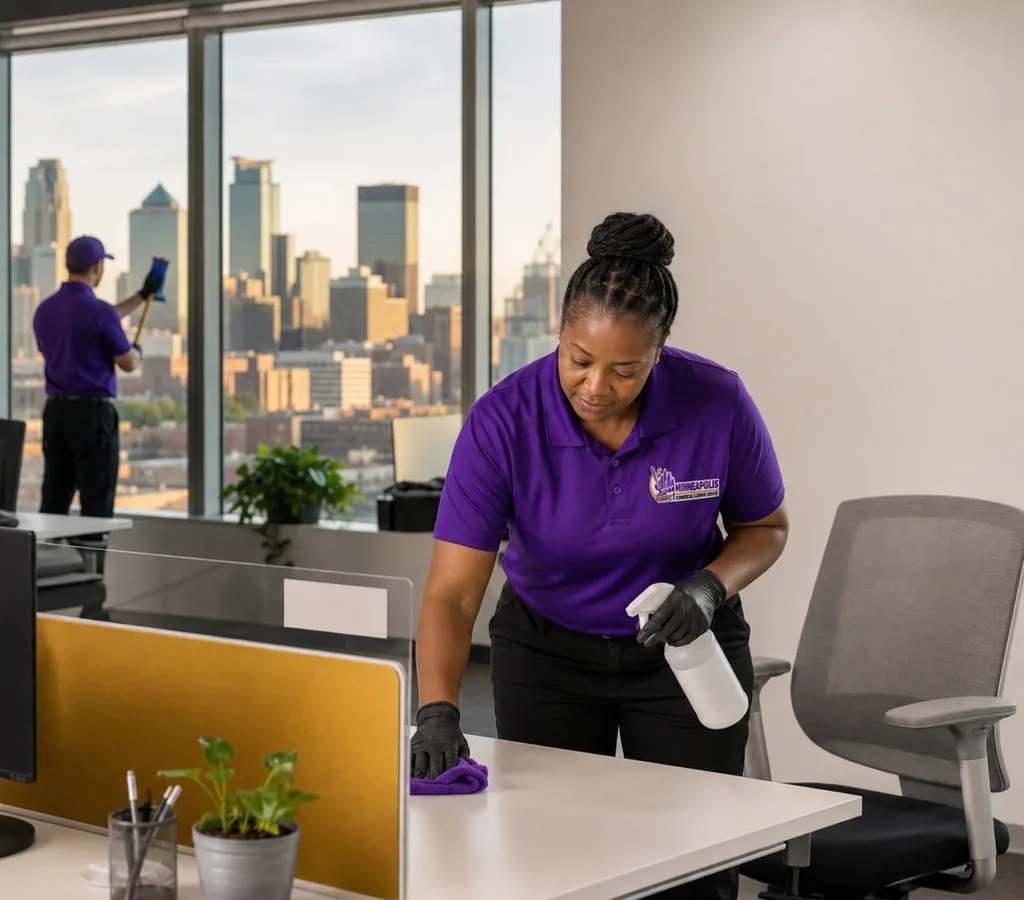
Office buildings
Tenants do not complain about the cleaning. They complain about the building, to the property manager, and it becomes your problem instead.
Where complaints actually land
An office building is not one client. It is a property manager who owns the standard, tenants who live with it daily, and visitors forming an impression in thirty seconds. Only one of the three ever calls.
That is the structural problem with multi-tenant cleaning. A tenant whose shared restroom ran out of towels does not phone the cleaner. They email the property manager, and the manager ends up chasing a vendor about paper towels. Enough of those and the cleaning contract gets blamed for the building's reputation.
So common areas get scoped first: lobbies, elevators, corridors and shared restrooms, at frequencies matched to traffic rather than floor area. We check the standard ourselves rather than waiting for the email that starts with just letting you know.
What is included
Every scope is built for the specific building. These are the areas most offices plans cover, with frequencies set during the walkthrough.
The first thirty seconds of the building. Entry glass, floors, seating, and surfaces maintained at a frequency that reflects how many people pass through rather than how large the space is.
High-touch surfaces, tracks, and floors in the spaces every tenant uses. Elevator interiors show fingerprints and scuffing faster than almost any other surface in a building.
Serviced at a frequency matched to building headcount, with consumables managed so they never run out. Shared restrooms generate more tenant complaints than anything else in a multi-tenant property.
Individual scopes for tenants who want their own service, delivered under the same building schedule so access and timing stay coordinated.
Communal spaces that nobody feels responsible for, cleaned properly rather than tidied, including appliance exteriors and the surfaces behind them.
Matting, more frequent entry attention, and floor care through the salt season, which is where most of a Minneapolis building's floor damage originates.
How we approach it
The recurring failure is that the standard exists only in conversation. Something gets missed, it improves for two weeks, and drifts back. Without a written scope there is nothing to hold anyone to.
We put the scope in writing per zone and run quality checks on our own schedule. That means most issues get found and fixed before a tenant raises them, which is the only real measure of whether building cleaning is working.
For multi-tenant properties we also coordinate access, badge and alarm procedures and timing directly with management, so individual tenants never have to project-manage the cleaning of their own building.
Getting started
Four steps, no long sales process. Most offices clients go from first call to first service inside a couple of weeks.
Check AvailabilityWe walk the building with you and note what matters: traffic patterns, flooring, access requirements, and what a previous cleaner kept missing.
What is cleaned, how often, and when, in writing. The schedule is set around your hours rather than ours.
If the building has been under-served, a one-time detail clean sets the baseline so the recurring scope holds a standard rather than chasing a backlog.
The same crew works your building. We run checks on our own schedule rather than waiting for a complaint.
Pricing
Office building pricing depends on the split between common area and tenant space, building headcount, and how many restrooms are in service. A multi-tenant property with heavy shared-area use costs more per square foot than a single-tenant building of the same size, because common areas absorb the traffic of every tenant.
Restroom count and square footage, which drive most of the labor time
Visit frequency, from twice a week through to daily service
Flooring mix, since hard floor and carpet care need different equipment
How heavily the space is used, and whether it is public-facing
Add-ons such as consumables, interior glass, or periodic deep cleaning
We quote after walking the building rather than over the phone. A scope guessed from a square-footage figure is the usual reason a cleaning price changes three months in.
Common questions
Yes. For multi-tenant buildings the property manager normally owns the common-area scope and standard, and we coordinate access, scheduling, and quality reporting with them directly.
Yes. Tenant suites can have individual scopes and frequencies while remaining on the building's overall schedule, so access and timing stay coordinated.
Most office buildings are serviced in the evening after occupancy. Lobbies and heavily used common areas in busy buildings sometimes warrant a daytime porter as well, which we will recommend when the traffic justifies it.
Badge access, alarm codes, and sign-in procedures are confirmed in writing before the first visit. The assigned crew stays consistent rather than rotating, which matters more for security than any procedure.
It gets corrected promptly and we look at whether the scope or the frequency caused it. A recurring miss is usually a scoping problem rather than a crew problem, and fixing it properly means changing the scope.
Services for this sector
Service area
Based in Minneapolis and working with businesses throughout the metro.
Get started
Tell us how your space is used and what has not been working. We walk the building, put the scope in writing, and give you a price with no guesswork.
Get a quote
Tell us about your building and how it is used. We walk the space, put the scope in writing, and give you a price with no guesswork. We reply to every enquiry.
Prefer to talk? Call (612) 445-4217
Or email [email protected]
We use your details only to respond to this enquiry.